Agnieszka Holland retrospective
BFM — 44
BFM — 44
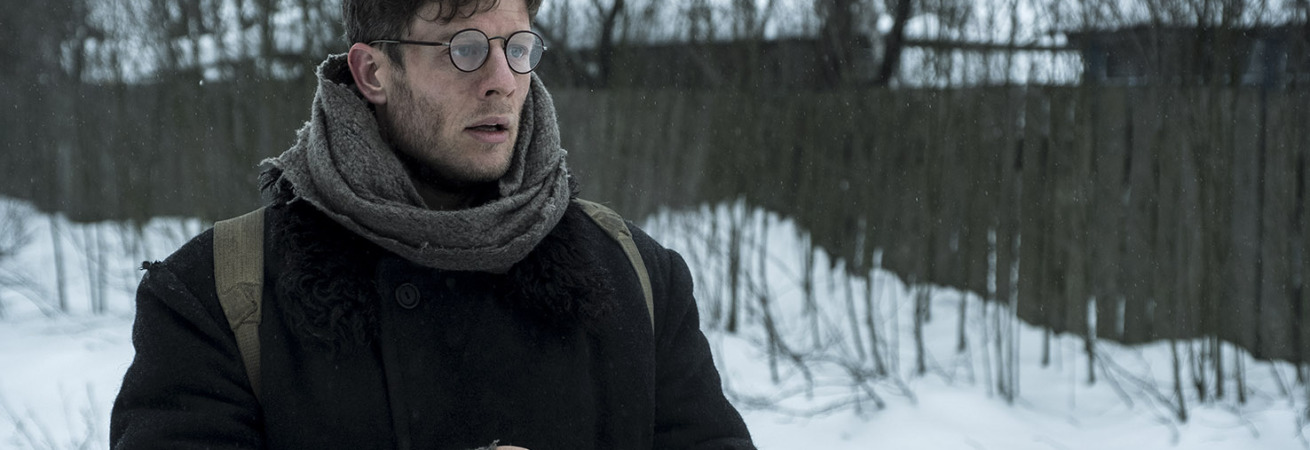
Agnieszka Holland (Warsaw, Poland, 1948) is one of the leading figures in contemporary European cinema; a consistent and politically insightful filmmaker, capable of switching between arthouse cinema, international productions and TV series without sacrificing her personal vision. She studied at FAMU in Prague, where she absorbed the legacy of the Czechoslovak New Wave. Back in Poland, she worked as Andrzej Wajda’s assistant, an experience that profoundly shaped her relationship with historical and morally themed cinema. Her career as a director began with early experimental and television works such as Dziewczyna i “Akwarius” (A Girl and Akwarius), an episode of the anthology film Obrazki z życia (1976), a portrait of youthful rebellion that anticipated the social tensions of the time, and Zdjęcia próbne (Screen Tests, 1977), which explores the insecurities and moral dilemmas of adulthood.
In 1979, she received her first international accolade with Provincial Actors, which won the FIPRESCI Prize at the Quinzaine des Réalisateurs in Cannes. In the following years, she directed iconic titles such as Fever (1981) and Bittere Ernte (Angry Harvest, 1985), her first large-scale international project: an intense drama set during Nazi occupation that chronicles the impossibility of differentiating self-interest from compassion during times of terror. The film was nominated for an Oscar for Best Foreign Language Film and won the Best Actor award at the Montreal International Film Festival. Later in 1981, she directed the TV feature Kobieta samotna (A Lonely Woman), only to have it banned by censors for its scathing portrayal of women’s lives under the Polish communist regime. The film was only released in 1987 and is now considered one of the most iconic works of the so-called ‘cinema of moral anxiety’.
Her international consecration came with Europa Europa (1990), inspired by a true story: the film recounts
the survival of a young Jewish boy who, during World War II, manages to stay alive by pretending to be of Aryan descent and joining the Hitler Youth. The film won the Golden Globe for Best Foreign Language Film and an Oscar nomination for Best Screenplay, becoming one of the most emblematic films exploring the themes of identity and the Holocaust.
In the 1990s, Holland switched between arthouse cinema and Anglo-American productions, directing Olivier, Olivier (1992), which was presented in competition at the Venice Film Festival; The Secret Garden (1993), based on the novel of the same name by Frances Hodgson Burnett; Total Eclipse (1995), an intense portrait of the relationship between Rimbaud and Verlaine; and Washington Square (1997), based on the eponymous novel by Henry James. During this period, she also worked with Krzysztof Kieślowski on the screenplay for the Trois couleurs trilogy.
In 2002, she directed Julie Walking Home, a story of loss and emotional reconciliation, and, in 2006, Copying Beethoven. This historical drama revisits the composer’s final years, highlighting the struggle between genius and loneliness.
After a long and significant career in television – with episodes of series such as The Wire, Treme and House
of Cards – Holland returned to historical cinema with W ciemności (In Darkness, 2011), set in the sewers of Lviv during the Nazi occupation, which received an Oscar nomination for Best International Feature Film. With the miniseries Burning Bush (2013), based on the sacrifice of Jan Palach, she won several Czech Lion Awards, including those for Best Director and Best Series.
In recent years, she directed politically charged works such as Pokot (Spoor, 2017), co-directed with Kasia Adamik, an environmental thriller that won the Silver Bear at the Berlinale; Mr. Jones (2019), about the journalist who exposed the Holodomor; and Šarlatán (Charlatan, 2020), a historical biopic about the healer
Jan Mikolášek, in competition at the Berlinale and winner of numerous Czech Lion Awards. In 2023, Holland directed Green Border, a powerful commentary on the refugee crisis on the border between Poland and Belarus, which, alongside other accolades, received the Special Jury Prize at the Venice Film Festival.
Her latest feature film, Franz (2025), is a biopic about the life of the writer Franz Kafka. Intense and experimental, the film is a portrait of the Bohemian author’s life and works. It attracted worldwide attention after its world premiere at the Toronto International Film Festival and its selection as Poland’s entry for the 2026 Academy Awards in the Best International Feature Film category.
With a career spanning more than five decades, Agnieszka Holland has built a body of work that combines historical accuracy, psychological depth and political engagement. A deeply ethical and humanistic filmmaker, she continues to reflect on the past and present, giving voice to the disenfranchised and challenging the dominant narratives of those in power, confirming her status as one of the most influential and respected filmmakers of our time.
In collaboration with the Polish Institute in Rome.
On Saturday 14 March, at 12.30 pm at the CULT! Auditorium in Piazza della Libertà, the director will be connected via video for a Q&A with the audience.